














Skip to main content Skip to main navigation menu Skip to site footer
the word scripted in blue and red against a white background.
  • Home
  • About
    • About the Journal
    • Journal Policies
    • Publication Ethics
    • Editorial Team
    • Contact
  • Issues
    • Current Issue
    • All Issues
  • Submissions
    • Author Guidelines
    • Peer Review Process
  • Announcements
Search
  • Register
  • Login
  1. Home /
  2. Archives

Archives

  • Vol. 22 No. 1 (2025)

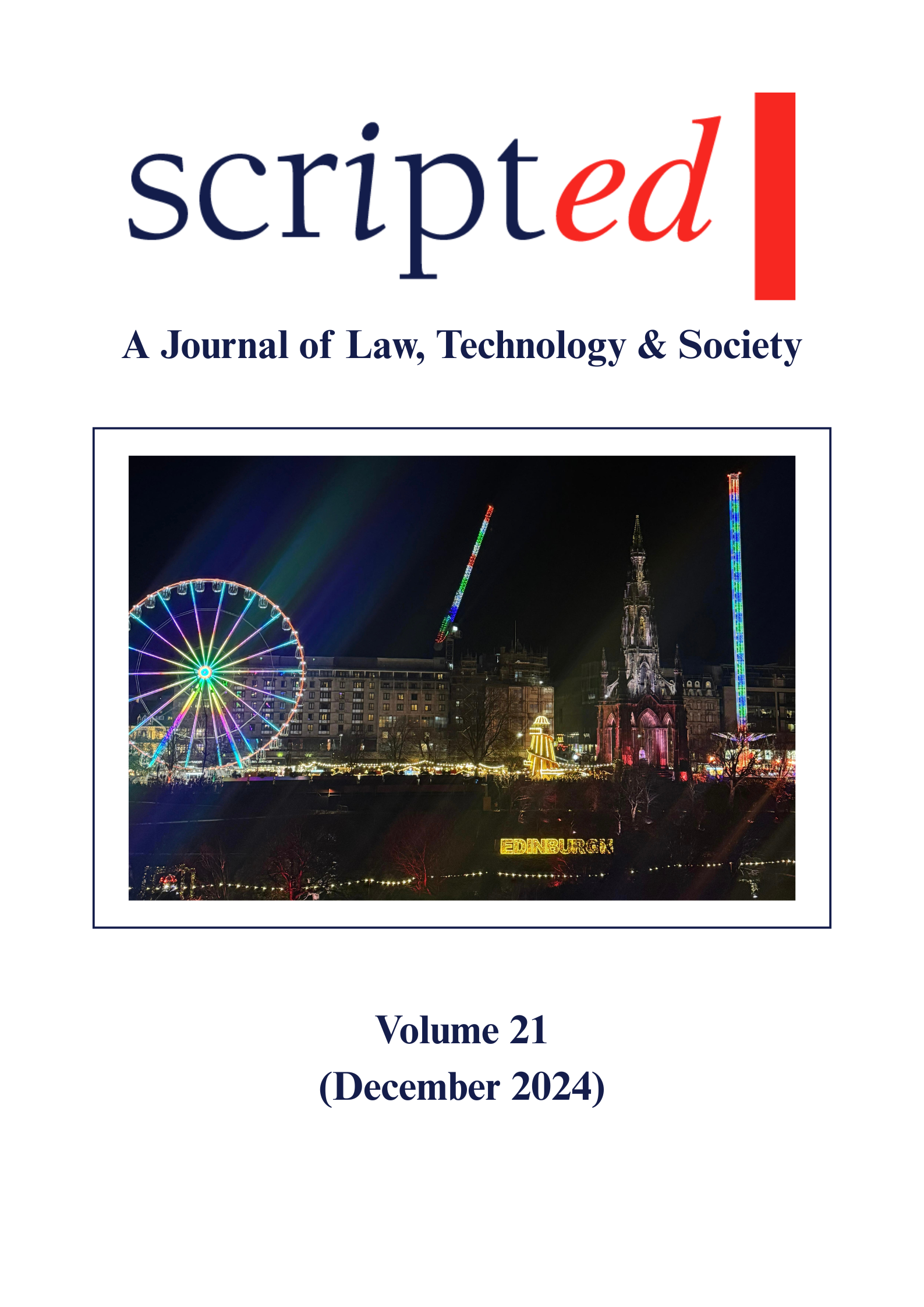
  • Edinburgh's Christmas Market (through the lens of Claudia González-Márquez)

    Vol. 21 (2024)

  • Vol. 20 No. 2 (2023)

  • Vol. 20 No. 1 (2023)

  • 'The Old College at night' by Simal Efsane Erdogan

    Vol. 19 No. 1 (2022)

  • Laggan Dam, Scottish Highlands Alp, by Kagan Yalcin

    Vol. 18 No. 1 (2021)

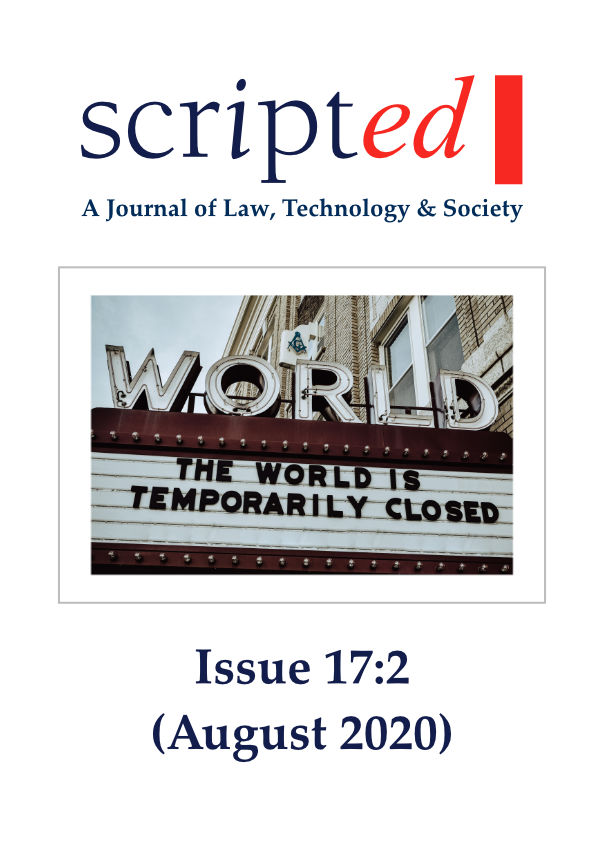
  • 'The World is Closed', by Edwin Hooper

    Vol. 17 No. 2 (2020)

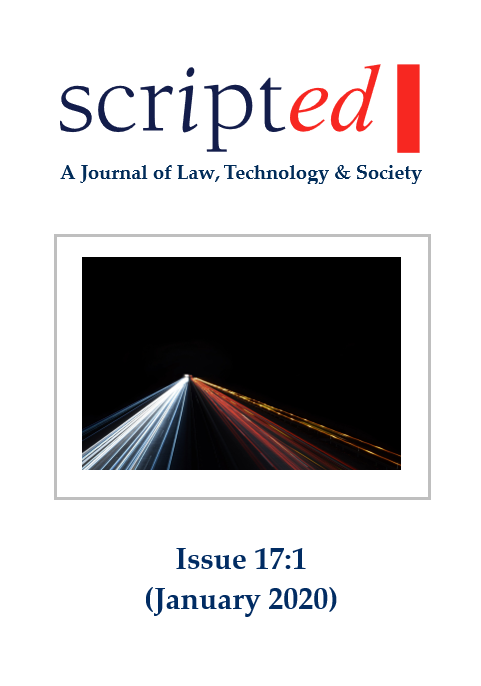
  • 'low exposure photo of cars on road during night time', by Paul Frenzel

    Vol. 17 No. 1 (2020)

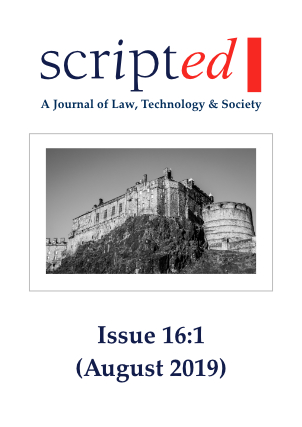
  • “Edinburgh Castle, Liam Macleod, A view of Edinburgh Castle from near Evolution House, where the SCRIPTed 15th Anniversary Conference took place”

    Vol. 16 No. 1 (2019)

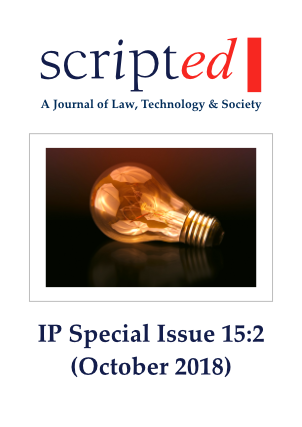
  • 'Lightbulb', by Johannes Plenio

    Vol. 15 No. 2 (2018)

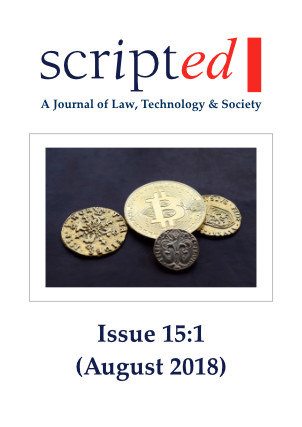
  • 'Moneta imaginaria', by Israel Cedillo Lazcano, Gasparo Scaruffi presented the idea for a global monetary standard in his work L’alitinonfo (1582), with the aim of standardising the numerous coinages then circulating around medieval Europe. This idea was structured around a concept known as “moneta imaginaria”, which represented a stable value relation between gold, silver, and copper and which all the currencies were expected to follow. Since the 2008 publication of Satoshi Nakamoto’s “Bitcoin: A Peer-to-Peer Electronic Cash System” – the “modern” version of John Law’s Money and Trade Considered (1705) – we have witnessed the emergence of numerous arguments claiming that Bitcoin has the potential to become a universal means of payment. Here, I wanted to show, with one picture, how we have tried (and in most cases failed) both to define money and to make it uniform through various instruments, laws, and technologies.

    Vol. 15 No. 1 (2018)

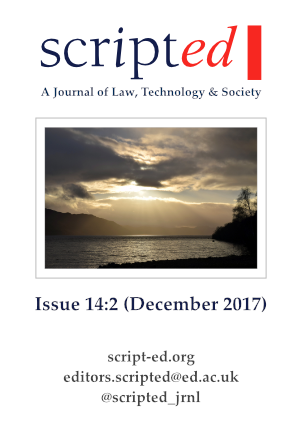
  • 'Illuminating the mysteries of Caledonia', by Israel Cedillo Lazcano, Amongst the mysteries related to the North Sea and the land the Romans called Caledonia, Loch Ness represents the marvels and challenges that Scotland has offered (and continues to offer) to any curious mind looking for inspiration. In this image, the referred inspiration can be associated with the sun illuminating the calm, but charming, surface of one of the most mysterious places on earth (Nikon D3300, 2017).

    Vol. 14 No. 2 (2017)

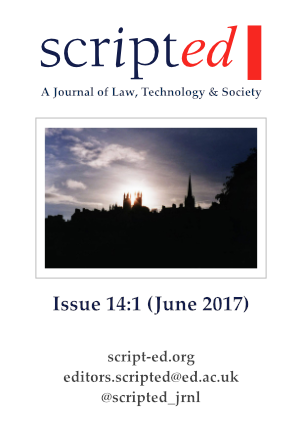
  • 'Glimpse', by Laurence Diver, The sun glints between the spires of New College on the skyline of Edinburgh’s Royal Mile (film, 2002).

    Vol. 14 No. 1 (2017)

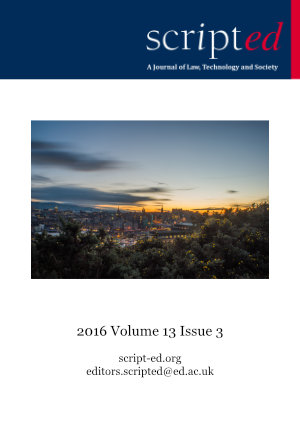
  • Max Mitscherlich, The City of Edinburgh inspired me to take this picture. Right after sunset I was standing on Calton hill and observed the pulsating city life. The diversity between old buildings, nature and modern technology is what fascinates me about this city.

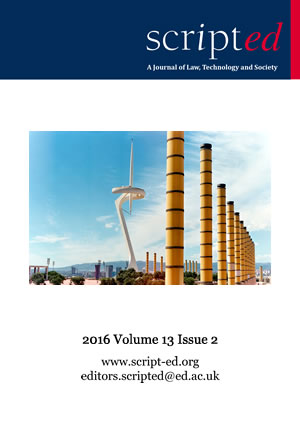
    Vol. 13 No. 3 (2016)

  • 'Jove', by Cameron-Wong McDermott, Santiago Calatrava’s Torre de Comunicacions de Montjuïc stands proudly on the hill of Montjuïc, the principal site of the 1992 Barcelona Olympic Games. It’s easy to marvel at the city’s unique modernist architecture, influenced by Gaudi’s work which intersects with his life’s passions: religion and nature. On the other hand, this image of the city seems to stand as an oxymoron, a more linear and less romantic representation of the city. Whereas Gaudi’s work flows from the principle that: “There are no straight lines or sharp corners in nature”, Calatrav’s interpretation of modernist architecture might be seen as a divergence from Gaudi’s ideals, serving to create an austere portrait of the city. Yet there is something oddly therapeutic about this picture. The over-saturation of the picture stands to emphasise the warmth of the colours.

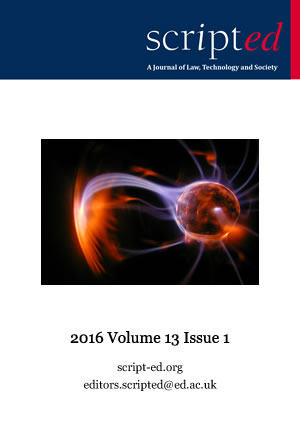
    Vol. 13 No. 2 (2016)

  • 'Black Hole', by Laurence Diver

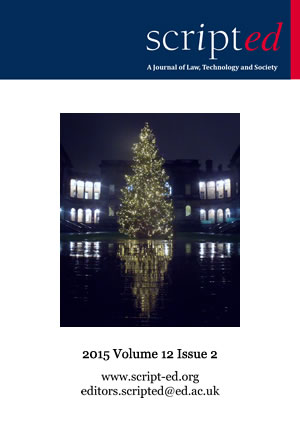
    Vol. 13 No. 1 (2016)

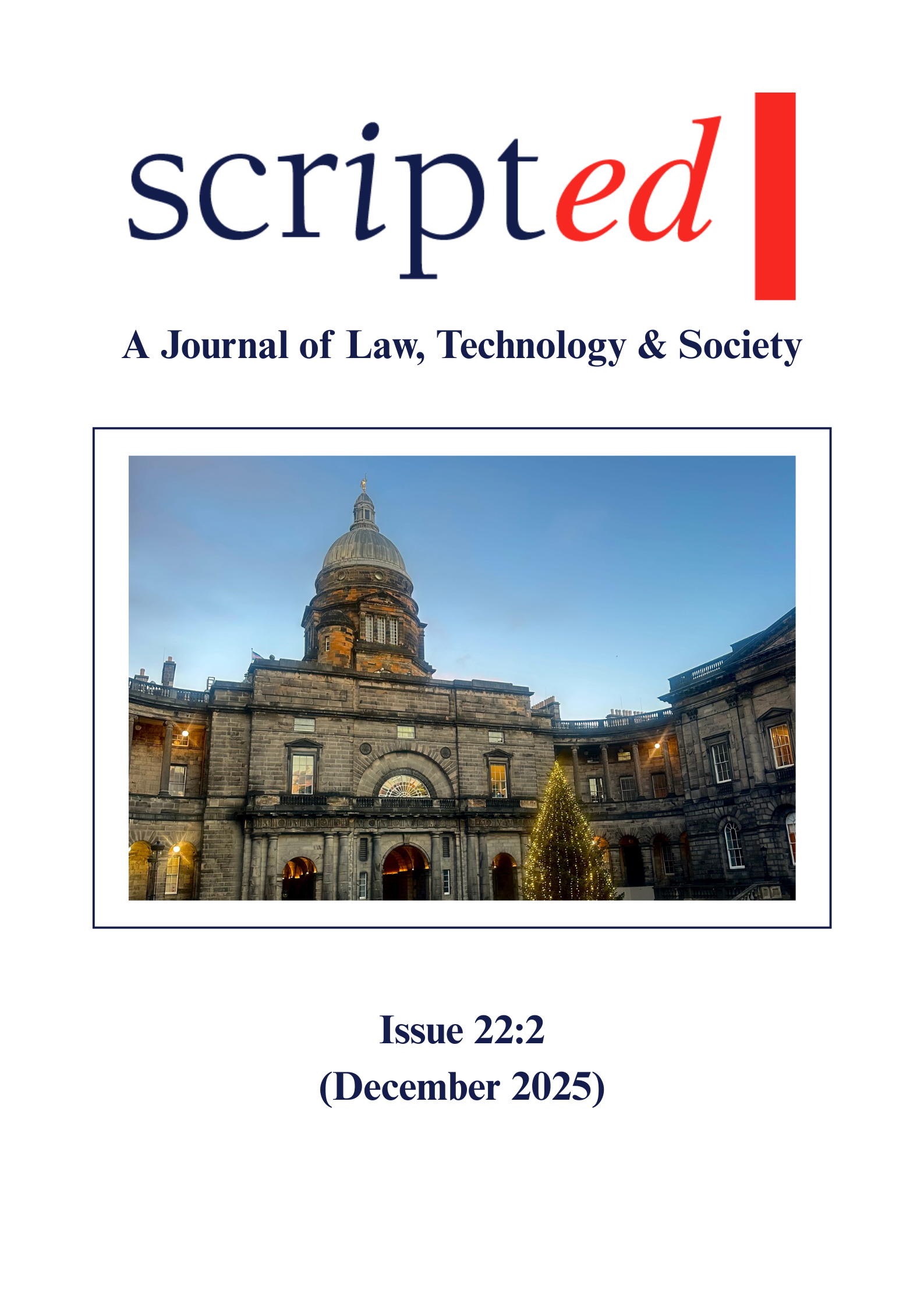
  • Christmas tree in Old College quadrangle

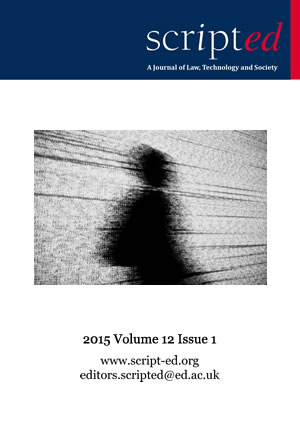
    Vol. 12 No. 2 (2015)

  • Ryoji.Ikeda – https://www.flickr.com/photos/rh2ox/

    Vol. 12 No. 1 (2015)

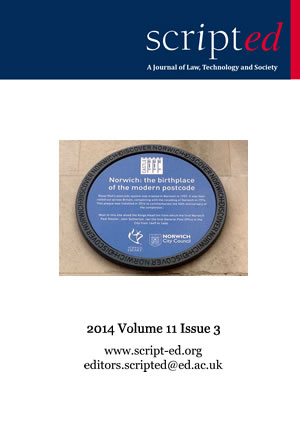
  • 'NOR', by Karen Mc Cullagh, A plaque erected by Norwich Heritage Economic and Regeneration Trust (HEART) on Gentleman’s Walk in Norwich in April 2014, marking the 40th anniversary of the introduction of postcodes in the United Kingdom. Norwich’s role in this project, and its relevance for law and technology today, is discussed in this issue’s editorial by Karen Mc Cullagh and Daithí Mac Síthigh

    Vol. 11 No. 3 (2014)

  • 'System Lock',  by Yuri Samoilov

    Vol. 11 No. 2 (2014)

  • '3 Padlocks (unlocked)', by Nick Benjaminsz

    Vol. 11 No. 1 (2014)

  • 'World Wide Web Analogic', by Anna-Maria Lopez Lopez , A vintage style shot of three old movable type printer characters showing a contemporary concept World Wide Web (WWW). A traditional communication medium with the digital communication concept joined together by the camera.

    Vol. 10 No. 4 (2013)

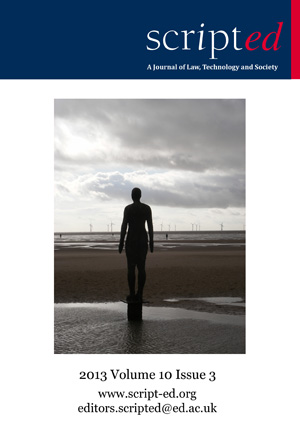
  • 'Gormley's Iron Man', by Philip Maidens, What inspired me about this image was the contrast between art and machine. As Gormley’s cast iron man looks out onto the sea beyond the windfarm off Crosby Beach this image truly signifies “technology without boundary.

    Vol. 10 No. 3 (2013)

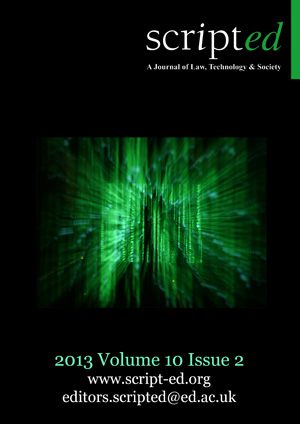
  • 'Matrix Code' by David.Asch, Playing with long exposure zoom.

    Vol. 10 No. 2 (2013)

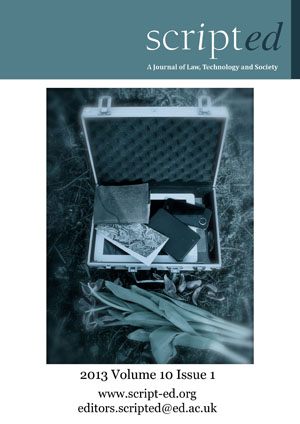
  • 'Post-mortem Privacy', by Nayha Sethi, The image was inspired by the idea that in an ever-evolving technological world, when we are buried, it is more and more difficult for our secrets and for that which we wish to remain private to be buried and to stay buried with us.

    Vol. 10 No. 1 (2013)

1-25 of 56 Next
 
SCRIPTed: A Journal of Law, Technology & Society | ISSN: 1744-2567 (Online)
 
SCRIPTed is an Open Access journal. All material is licensed under a Creative Commons Attribution-NonCommercial-NoDerivatives 4.0 International (CC BY-NC-ND 4.0) licence, unless otherwise stated.
 
Published by the University of Edinburgh with support from Edinburgh Diamond. Also supported by the University of Edinburgh Law School and SCRIPT Centre.

 
Contact | Privacy Policy | Cookies
 
     
More information about the publishing system, Platform and Workflow by OJS/PKP.