
Vol. 3 (2026): Coalition and Interruption
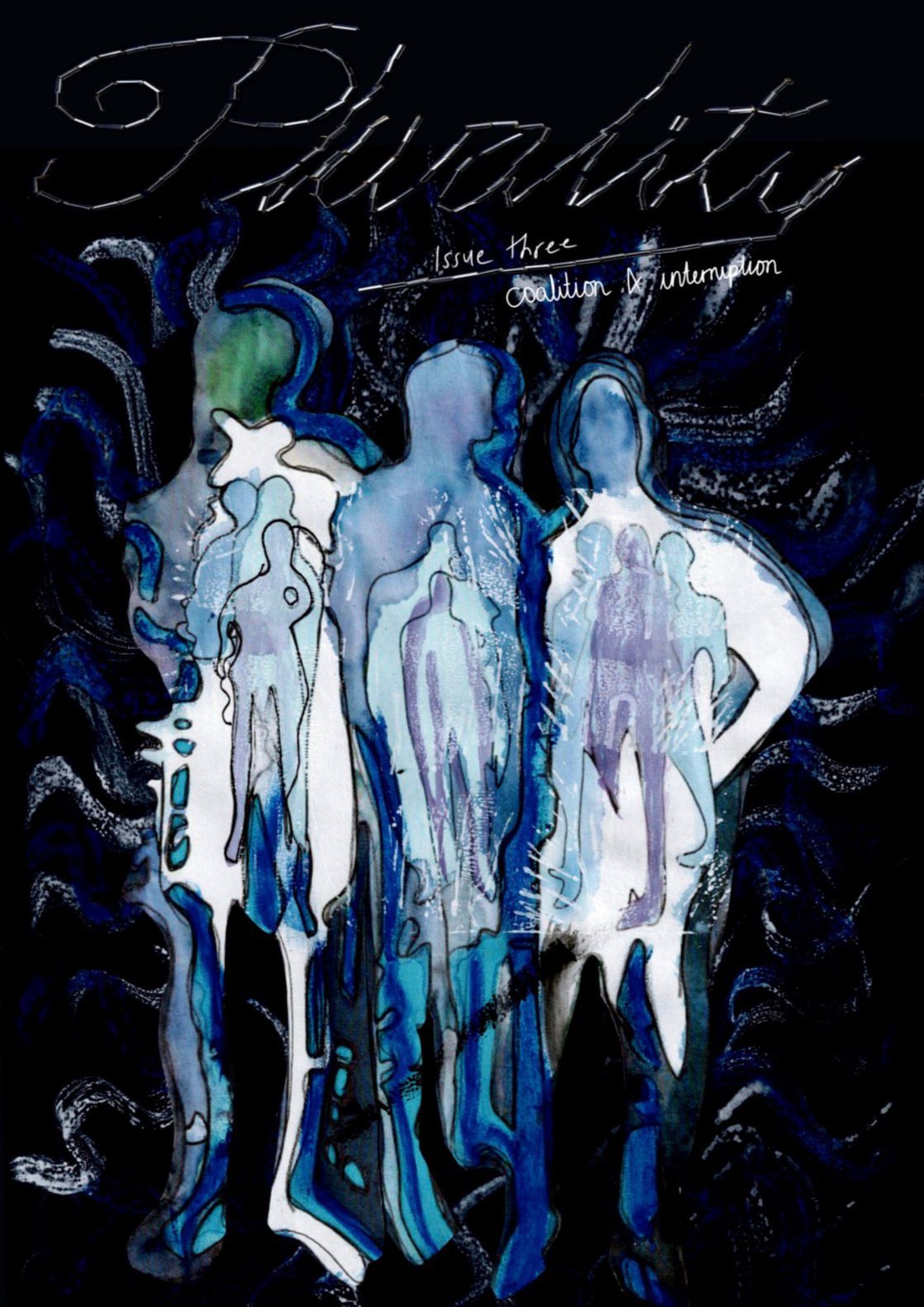
Feminist publication has long played an important role in the development and distribution of critical discourse. Theorists have used the independence of these publications from institutions, particularly their grassroots and independent nature, to question and express important criticisms of paradigmatic thinking. However, while these publications have been important, I sometimes wonder if this is enough to change the material conditions which we live under, and how can we expand our activism to go beyond the page. Along with the importance of not solely residing in critical discourse but also constructing feminist visions to aspire to and lead collective social movements with both an eye towards the ideal and non-ideal theorisation, to ensure that there is a mutual flow of ideas from the ground up and vice-versa. Thus, I am thrilled to present Plurality’s third issue on the theme of Coalition and Interruption. As we think in the ways theory and practice can form a coalition for change, along with how each can interrupt and ‘call in’ the other for the perusal of the project of liberation.
In this issue we have nine wonderful articles, starting off with Aileen Kuang thinking about how we can use Donna Haraway’s situated knowledges to expand intersectionality frameworks to consider beings beyond the human. Our other Philosophy and Divinity piece analyses the arguments of Lucrezia Marionella criticising the notion of using women’s beauty to argue for their value presented by Roopsha Deshmukh who argues that this fails to interrupt the patriarchal valuations of women based on beauty which cannot be reclaimed. For our Arts and Literature section we have Jada Horan who considers how Zora Neale Hurston utilizes spatial politics to question forms of authority via dynamic spaces and a lens of transformation. Followed by Piper Farmer’s piece which explores female solidarity analyzing the figure of the old crone in Chaucer’s The Wife of Bath’s Tale using Le Guin’s notion of ‘space crone’ to show how the crone can be a site to facilitate mutual aid and coalition-building. For the Social Sciences we have Rachel Barlow who looks at how women educators in Afghanistan have used coalition to resist oppression to learn from and apply to other feminist movements. Along with Elizabeth Hamilton analysing how nation branding uses ‘nation(ist)’ coalitions to define the discursive space of feminisms and who is included in the construction of the Nation. For our History and Classics section, Júlia Norman offers a careful consideration of Yorkshire women welders during the Second World War as agents within power structures who utilized collective resistance and individual acts of defiance to questioning paradigmatic historiographical narratives of women during this period. Grace Law Woodhouse begins the Law section with illustrating how feminist legal coalitions within reproductive rights movements have had to navigate the tension between calls for inclusive representation and increasingly restrictive legislation. Finally, we have Beth Hutchinson who ends off the issue with looking at how morality can be conflated with normative legal framework to restrict the body autonomy of marginalised communities, policing bodies who interrupt understandings of ‘the normal body’.
I am proud of where this project has come and the community which I hope it has fostered, even as I move away from leading the publication. I never would have thought that the publication would already be on its fifth issue! Along with the opportunities it has provided authors in being able to publish their work in a publication which attempts to demystify the academic publication process and expand what academic publication can look like. This past autumn we had the first transition to a new committee. While at first I was nervous with the prospective instability this could create, since continuity is often the step where student projects end, my worries were shown to be unfounded. I am humbled by how the new committee has stepped up and continued the important ethics of the publication along with expanding the project to greater heights. In many ways this issue has been a collaborative coalition between the past and future committee, in the sharing of skills, time and labour. It certainly gives me hope that this project may continue long past me being a student at Edinburgh.
The next committee has been diligently working on Issue 4: No Place Like Home, and calls for papers for Issue 5: The Natural are currently open so I thoroughly encourage aspiring researchers and writers to submit as I am confident you will find the editorial process a challenging yet rewarding experience. I write this final letter not as a goodbye but as a starting point for hoping that I have built a platform where future feminist thought can be published to foster the careers of current student feminist theorists and activists.