From axe to grooved stone: Evidence of recycling practices in the Neolithic
DOI:
https://doi.org/10.2218/jls.10717Resumen
This paper examines the recycling and reuse of Neolithic stone tools, with a focus on a modified shaft-hole axe fragment discovered at Wierzbie, southwestern Poland. The study involved technological and use-wear analysis, supported by 3D modelling, to trace the life cycle of this tool and its transformation into a grooved stone. Stone tool recycling in prehistoric times often involved practices like edge resharpening and the adaptation of damaged tools, reflecting a pragmatic approach to resource management. The modified axe from Wierzbie illustrates a shift in tool function, highlighting a broader trend of reusing Neolithic implements, particularly in Late and Final Neolithic and Early Bronze Age contexts.
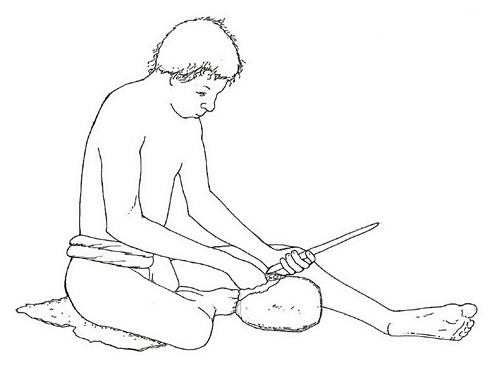
The tool's chronology was determined through detailed morpho-typological analysis and 3D model comparisons with complete Corded Ware culture (CWC) shaft-hole axes, confirming its origins within the CWC. The axe made from diabase was modified after it was damaged. The unusual nature of its modification suggests it was likely recycled during the Final Neolithic or Early Bronze Age, possibly linked to the Bell Beaker culture. This is supported by similar grooved stones used as shaft straighteners in Central Europe, particularly within Bell Beaker contexts. Microscopic analysis of the tool's surface reveals wear patterns consistent with its new function, including polishing and striation marks associated with shaping plant-derived material.
The results of this study highlight the adaptive strategies employed by prehistoric communities to prolong the lifespan of tools and materials, influenced by cultural and economic factors. This study highlights the complex life cycle of stone tools, demonstrating that recycling was not merely a functional necessity but also a culturally ingrained practice that helped maintain valuable resources within specific social and economic spheres. Through this lens, the Wierzbie artefact offers important insights into the technological ingenuity and material culture of prehistoric societies in Central Europe.
Descargas
Archivos adicionales
Publicado
Número
Sección
Licencia
Derechos de autor 2025 Journal of Lithic Studies

Esta obra está bajo una licencia internacional Creative Commons Atribución 4.0.