Vol. 44 N.º 2 (2025)
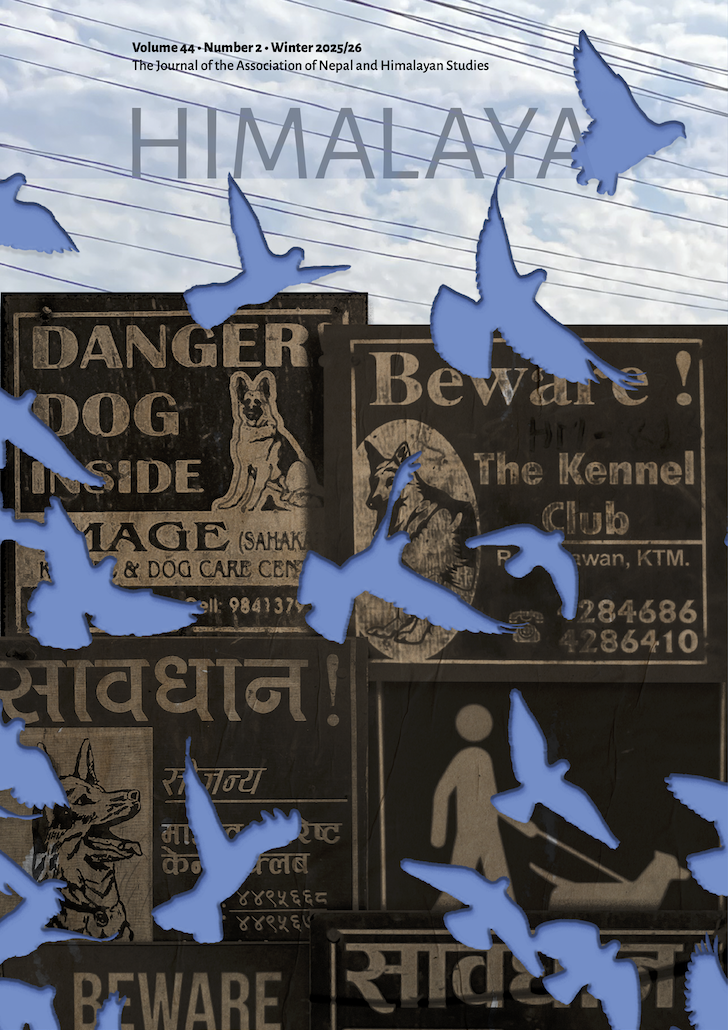
This issue of HIMALAYA brings together scholarship attentive to moments of rupture, endurance, and creative response across the Himalayan region. Spanning Nepal, Ladakh, Bhutan, and the western and eastern Himalaya of India, the contributions examine how political unrest, ecological transformation, migration, and ritual life are lived and interpreted on the ground. Articles in this volume explore ghost narratives and gendered anxieties in Nepal, the commodification of conservation in Ladakh, gossip as ritual critique among Newar Buddhists, food as a medium of transnational connection for Bhutanese migrants, and the transmission of sacred artistic traditions in Sikkim and Himachal Pradesh. Together with a conference report on plural medical worlds and a set of book and film reviews, the issue foregrounds ethnographic specificity while engaging broader debates about authority, care, heritage, and movement. Taken as a whole, Volume 44, Number 2 offers a portrait of Himalayan life shaped not by timelessness, but by ethical tension, historical depth, and the persistent effort to make meaning amid uncertainty.
Publicado:
23-Jan-2026