
Mary Mother of God Church, Kalimpong
Architectural Inculturation, Cultural Adaptation, and Tibetan Buddhist Influences
DOI:
https://doi.org/10.2218/himalaya.2026.12333Palavras-chave:
architectural inculturation, Tibetan Buddhist architecture, cultural adaptation, religious localization, sacred spaceResumo
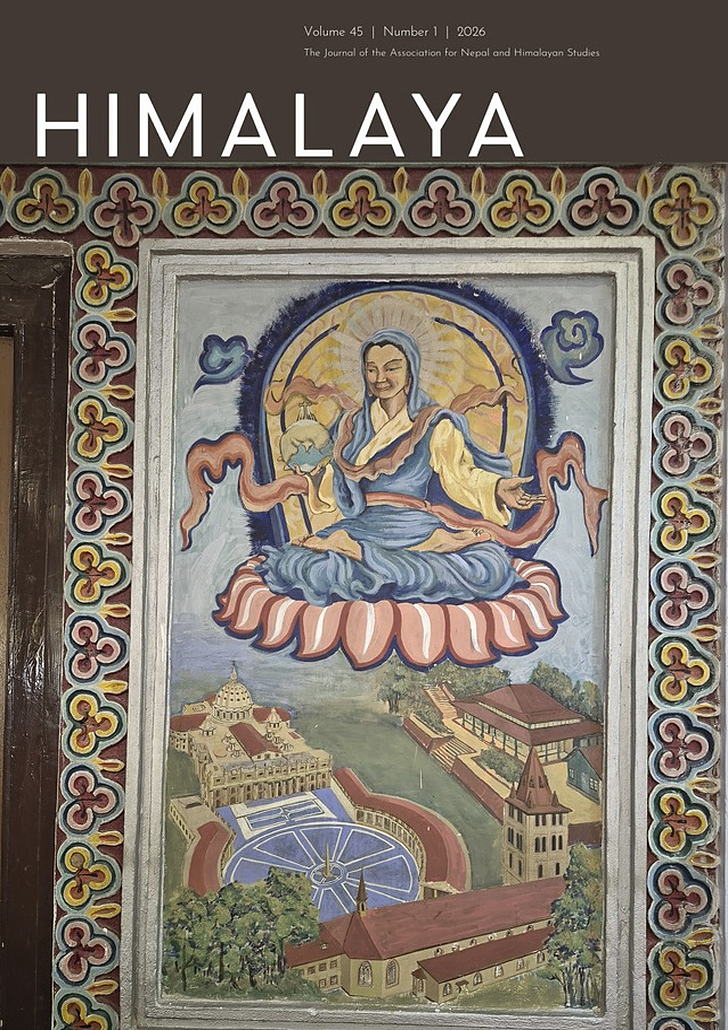
The Mary Mother of God Church, opened in 1976 on land acquired in 1972 under the guidance of Father Emmanuel Jex-Collet in Kalimpong, West Bengal, represents a distinctive example of architectural inculturation in the Eastern Himalayan region, where Christian theology is expressed through Tibetan Buddhist architectural and artistic forms. Situated along the bustling Relli Road within a multicultural environment shaped by the historical presence of Tibetan Buddhist communities, the church reflects broader processes of cultural adaptation and religious localization that emerged in the wake of the Second Vatican Council. Despite its architectural uniqueness and historical significance, the church remains relatively underappreciated and understudied. This paper examines how Tibetan Buddhist architecture and visual culture mediate the relationships among religion, culture, and identity by drawing on the concepts of contact zones and sacred spaces. It critically engages with debates concerning syncretism, cultural appropriation, and missionary encounters. Rather than viewing the church as merely a symbol of interfaith harmony, the study argues that it functions as a complex site of negotiation where questions of representation, belonging, and cultural translation continue to unfold. Methodologically, the study employs a qualitative case study approach that combines architectural and visual analysis with archival research and field observation to explore how religious and cultural identities are negotiated and articulated through sacred space in the Eastern Himalayan region. The study contributes to broader discussions on religious localization, architectural hybridity, and the material expression of Christianity in the Eastern Himalayas.
Downloads
Downloads
Publicado
Edição
Secção
Licença
Direitos de Autor (c) 2026 Tenzin Nyima Bhutia, Pawan Rai

Este trabalho encontra-se publicado com a Licença Internacional Creative Commons Atribuição-NãoComercial-SemDerivações 4.0.